

Apple just released a $599 MacBook.
TLDR
Apple announced the MacBook Neo at $599 (education: $499). It runs an iPhone chip (A18 Pro) instead of M-series — a deliberate compromise. But the play isn't about specs. It's about turning the Mac into the new gateway to Apple's ecosystem. The $499 education price matches Chromebooks. Apple isn't selling a laptop. It's selling the next 20 years of a customer — and their family.
Apple Just Did Something Weird
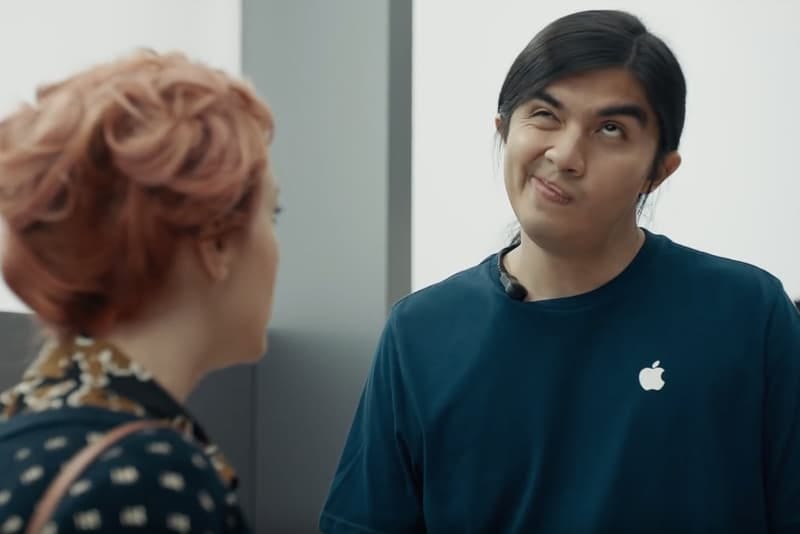
Apple just made the Mac cheap. $599 cheap. Education discount: $499.
Here’s the thing — a luxury brand dropping its entry price by 40% is usually a sign of desperation. Hermès releasing a $100 handbag would stop being Hermès the moment it hit shelves. But Apple isn’t a luxury brand anymore. Apple is an ecosystem company. And ecosystem companies don’t sell products. They sell lock-in.
My first reaction: "Has Tim Cook lost his mind on margins?" But the deeper you dig, the clearer it gets — this isn't a margin play. It's a trap.
The $999 Wall Just Fell

For the past decade, the cheapest Mac cost $999. Apple held that line deliberately — premium segment only, no exceptions. The result? Mac market share: 9.4%. Lenovo: 27.2%. Classrooms: dominated by Chromebooks. Hundreds of millions of iPhone users worldwide who wanted a Mac but couldn’t justify the price.
MacBook Neo cuts that wall in half. And the $499 education price puts it squarely in Chromebook territory.
It ships March 11. It runs an A18 Pro chip (that’s an iPhone chip, not an M-series), 8GB RAM, two USB-C ports, no MagSafe. On paper, it’s a compromise machine.
But judging the Neo by its specs is like judging a Disneyland ticket by its paper quality. The point isn’t the ticket. It’s what happens after you walk through the gate.
The Entry Point Just Flipped
The old Apple funnel worked like this: buy an iPhone → get curious about Mac. The iPhone was the gateway drug.
Problem: the iPhone market is saturated. I looked at the Galaxy S26 this week and thought aliens built it. Camera, display, weight, design — it matches or beats the iPhone 17 Pro on nearly every spec. And yet I can’t switch.
One reason. The ecosystem.
From where I sit — and I say this as a recovering excel-slave and ThinkPad loyalist — the Mac opens instantly. Text copied on my iPhone pastes on my MacBook. My iPhone hotspot connects before I finish turning off airplane mode. Universal Control lets my cursor glide from MacBook to Mac Mini like they’re one machine. AirPods follow me between devices. Apple Watch unlocks my Mac.
None of this shows up on a spec sheet. All of it shows up in daily experience. And that experience is what keeps people from leaving.
MacBook Neo flips the funnel from “Buy iPhone → get curious about Mac” to Buy $599 Mac → never have a reason to leave the ecosystem
The entry point reversed. The Mac is now Apple’s new front door.
The 20-Year Customer, for $499

Follow the causal chain on the education play:
A high school student gets a MacBook Neo for $499. Files accumulate in iCloud. They use Mac through college. After graduation, they buy an iPhone — because the ecosystem is already home. AirPods follow. Apple Watch follows. A decade later, they set up Family Sharing. Spouse and kids enter the ecosystem.
Apple isn’t selling a $499 laptop. Apple is selling the next 20 years of a customer’s spending. And their family’s.
AI Makes the Moat Deeper
There’s a reason OpenAI shipped the ChatGPT desktop app on macOS first — most of their engineers use Macs. In Silicon Valley, “a company that issues Windows laptops” is a quiet red flag in offer negotiations.
The 2025 Stack Overflow developer survey put macOS usage at 31% — over 3x Mac’s actual PC market share. GitHub Copilot, Cursor, Claude Code — in AI-native startups, finding a developer who doesn’t use a Mac is the hard part.
This creates a flywheel:
Developers prefer Mac (31%) → apps ship Apple-first, and better → user experience improves → more users choose Apple → developers prefer Mac even more → vibe coding brings non-developers into the loop → app quantity and quality rise simultaneously
AI is spinning this wheel faster. Non-developers are building apps on Apple Silicon via vibe coding. MacBook Neo is the device that puts more people on this flywheel. More users → more data → better experience → more users.
The virtuous loop that every AI model company wants to build, Apple has been running for a decade — with hardware, software, and services integrated under one roof.
“Samsung Can Do This Too”
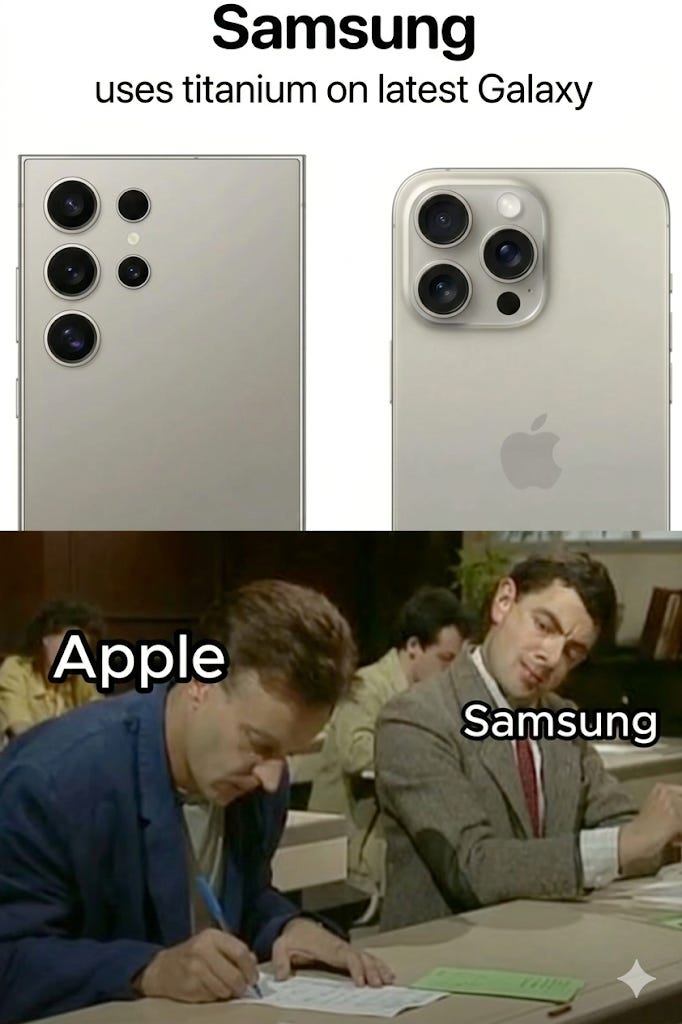
The strongest version of the counter-argument: Samsung builds world-class hardware. Galaxy-Windows integration has genuinely improved. Microsoft’s Phone Link, Samsung DeX, Quick Share — the gap is narrowing.
Fair point. But here’s the structural difference:
Apple controls chip, OS, hardware, App Store, cloud, and payments. One company. One incentive structure.
Samsung makes the hardware. Google makes the OS. Microsoft makes the desktop OS. Google runs the app store. Microsoft runs the cloud. Four companies. Four sets of incentives.
This isn’t an effort or tech problem. It’s a governance problem. Does Google have an incentive to optimize Android specifically for Samsung? Does Microsoft have an incentive to tailor Windows for Galaxy Book? Each company is optimizing for its own flywheel, not Samsung’s.
Apple can sell a low-cost device without diluting the brand because the brand isn’t the hardware. The brand is the ecosystem. Samsung can match the price. Samsung can beat the specs. Samsung cannot replicate the integration — because the integration requires controlling the entire stack.
So What?

MacBook Neo’s real spec isn’t the A18 Pro or 8GB RAM. It’s this: ecosystem entry ticket, $599.
What makes this play fascinating is what Apple didn’t do.
Most companies scramble to fix their weaknesses. “AI is behind” → panic-invest in AI. “Too expensive” → slash prices and damage the brand.
Apple went the other direction. They acknowledged the AI gap, plugged it with external resources (Google’s Gemini) just enough to neutralize the liability, and then doubled down on what they already do better than anyone: the ecosystem.
They didn’t fix the weakness. They sharpened the strength.
In a world where every software product gets replicated and model performance converges, the durable moats are network effects, ecosystem lock-in, physical integration, and community. These are the moats that matter more in the AI era, not less.¹
And that raises a question worth sitting with — for startups, for VCs, for anyone building something:
In an era where AI can patch your weaknesses, what’s the strength you should be sharpening?
We’ll keep watching.
Ian
¹ No, I don’t mean humanoid robots. Put your hand down. 😄