


Cluely’s CEO confesses: the $7M revenue was a lie
Cluely was last year’s hottest startup, blowing up TikTok and Twitter with its “Cheat Everything” concept. Bryan Kim from a16z invested $15M in a Series A, and all of Silicon Valley was talking about this rage-bait marketing success story.
On March 5th, Cluely’s founder Roy Lee went on X and personally confessed to his lie. The $7M ARR he announced to TechCrunch? It was fake. The real number was $5.2M. He inflated it by $1.8M. In his own words: “I got a call out of nowhere, rambled a bit to a reporter, and didn’t think it would actually become a story.”
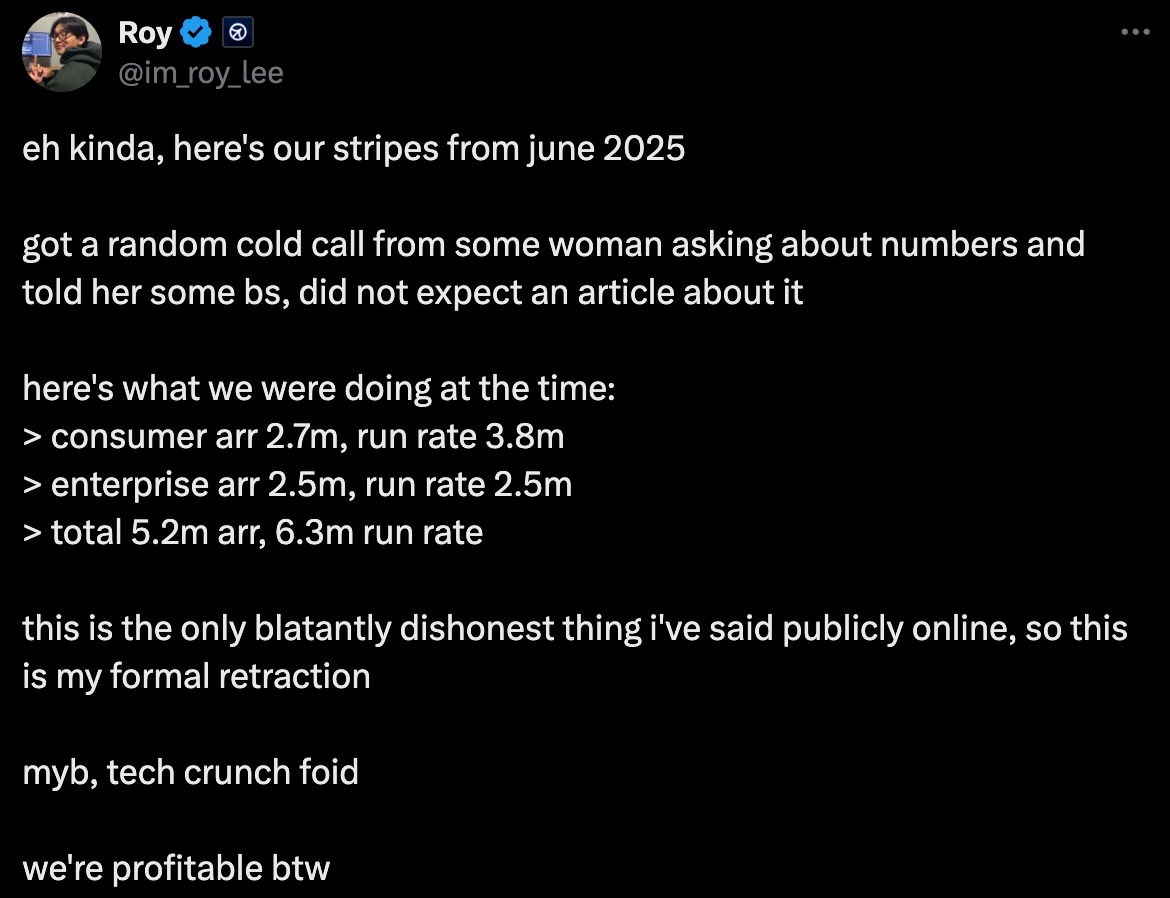
This is clearly wrong. He admits it himself. And even after the confession, conflicting accounts between him and TechCrunch about the circumstances of the interview keep chipping away at his credibility.
And now, people are placing Cluely right next to Theranos and FTX.
My history with Cluely
I’ve met Roy in early 2025. The moment I heard that Big Tech had rescinded his job offer for cheating an interview, I tracked down Roy’s personal email and reached out. We met over Zoom while he was in his Columbia dorm room. It was before he’d started fundraising, and I remember him saying I was one of the first VCs he’d ever spoken with.
He introduced me to his co-founder over the laptop camera and walked me through their plans. My impression at the time: a brilliant, hungry college kid overflowing with ambition — and in that brief encounter, unmistakably an outlier. We bonded over both being Korean American, and he offered allocation for me to invest, but unfortunately, the deal fell apart because the whole 'cheating company' thesis wasn't well-received.
Can you really put this on the same line as Theranos and FTX?
Let me give you the conclusion first — not yet. And I don’t think it will be.
Theranos deceived investors and patients simultaneously with technology that didn’t exist. There was no working product. FTX siphoned billions in customer assets into a sister company. The core of both is the same — they lied to investors.
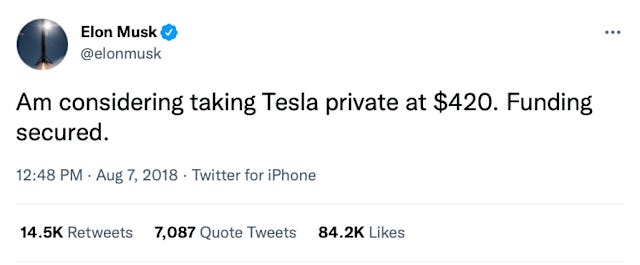
Cluely padded $1.8M on top of real revenue of $5.2M. They inflated the number. And here’s what matters most: telling an inflated number to a reporter and telling it to investors are two very different problems (even though both are wrong). There is exactly one threshold where this gets legally serious — whether he fed the same numbers to a16z and other investors. And that hasn’t been established yet.
I’m not a lawyer, but to my understanding, the anti-fraud provisions of federal securities law apply when a false statement is made “in connection with the purchase or sale of securities.” Inflating your ARR to a reporter, by itself, is unlikely to meet that threshold. But if that TechCrunch article was used as a reference in investor meetings, or if it influenced investment decisions, the story changes entirely.
If he lied to investors too — if he directly provided falsified materials — that’s a career-ending event. That’s the Theranos and FTX ending. But I believe this was a moment of competitive bravado in a press interview, not investor fraud. If he didn’t lie to his investors, this isn’t a crime — it’s an incident that lives squarely in the gray zone of 'fake it till you make it'. You can criticize it, and plenty of people despise this Silicon Valley and consulting-world mental model, but it’s nothing more and nothing less than that.
So why is he getting torn apart like this?
A $1.8M revenue exaggeration, even if it’s not a legal issue, is absolutely worthy of criticism. A company that built its brand on “cheating” interviews and life just cheated the public. But I think the reason Roy is catching this much heat goes deeper than that.
Cluely pushed the 'interview cheating' angle so hard that they built an audience primed to turn on them. Virality breeds fans and haters simultaneously. When the controversy hit, the haters swarmed all at once — 90-second response delays, admin passwords left exposed in public directories — every single thing came under a microscope. The perception: this team spends all its time chasing clout and almost none building the product. With that track record stacked up, the suspicion compounds, and one mistake detonates everything at once.
This is the double-edged sword of media. Use it well and it’s a gift. Slip up and the exposure comes back at you tenfold. If Roy had quietly focused on substance after using virality to raise his funding, these things would have slid by. But because of all the heat and notoriety he'd accumulated, it all came back at once. (Which is why I believe not every founder needs to play the media game. There are certain people who can pull it off, and the rest shouldn’t try.)
Retention, retention, retention — not virality
Virality is a means to an end. But at Cluely, virality became the end itself. They stopped being a team that built product and became a team that sold attention.
I’ve written about this before — the common thread among startups dying on Instagram is that they couldn’t nail retention. And to nail retention, your product has to be ready.

I’m not dismissing viral strategy outright. Creating buzz for fundraising, then pouring time into the product, then generating noise again when needed — that’s a solid cycle. But when you fixate on the buzz alone, it becomes a problem.
At the end of the day, boring as it may be, consistently building the best product and driving retention is what matters most. Stay quiet during development, then create buzz once the product is ready. That’s the right order. Cluely flipped it.
VCs aren’t free from responsibility either
One more thing — this isn’t Roy’s failure alone.
Youth isn’t an excuse, but the role of an investor backing someone who’s brilliant but still inexperienced shouldn’t be limited to cheerleading. Especially with a college-age founder — I’m not saying micromanage, but share other case studies, offer experience-based mentoring. While the excessive virality was spiraling, while the rage-bait was outrunning the product, someone should have stepped in.
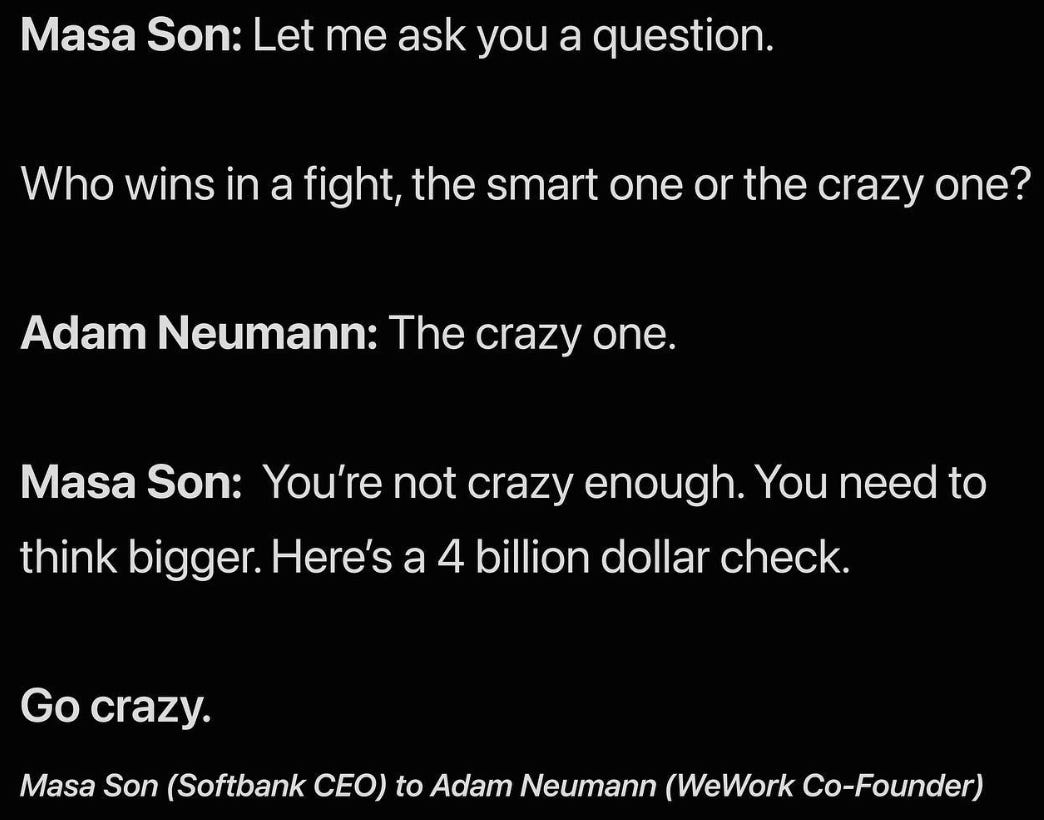
Bryan Kim, who led this deal at a16z, said at the time of the investment: “What matters is building the plane while falling off a cliff.” In the hyper-growth VC mindset, maybe that checks out. But when that plane is nosediving, it’s also the investor’s job to grab the controls.
a16z is one of the most experienced VCs in Silicon Valley. If they invested $15M and failed to warn that virality and fame were consuming the founder, that’s not investing — that’s abandonment. And since this whole thing blew up, a16z’s official statement? There isn’t one. That silence is already a message.
Fame Escape Velocity
Between this incident and the quiet suffering I see among semi-famous people, a concept crystallized for me — Fame Escape Velocity.
In physics, escape velocity is the minimum speed needed to break free of a celestial body’s gravity. SpaceX’s Starship needs to hit escape velocity to leave Earth’s atmosphere.
I realized the exact same dynamics apply to fame.
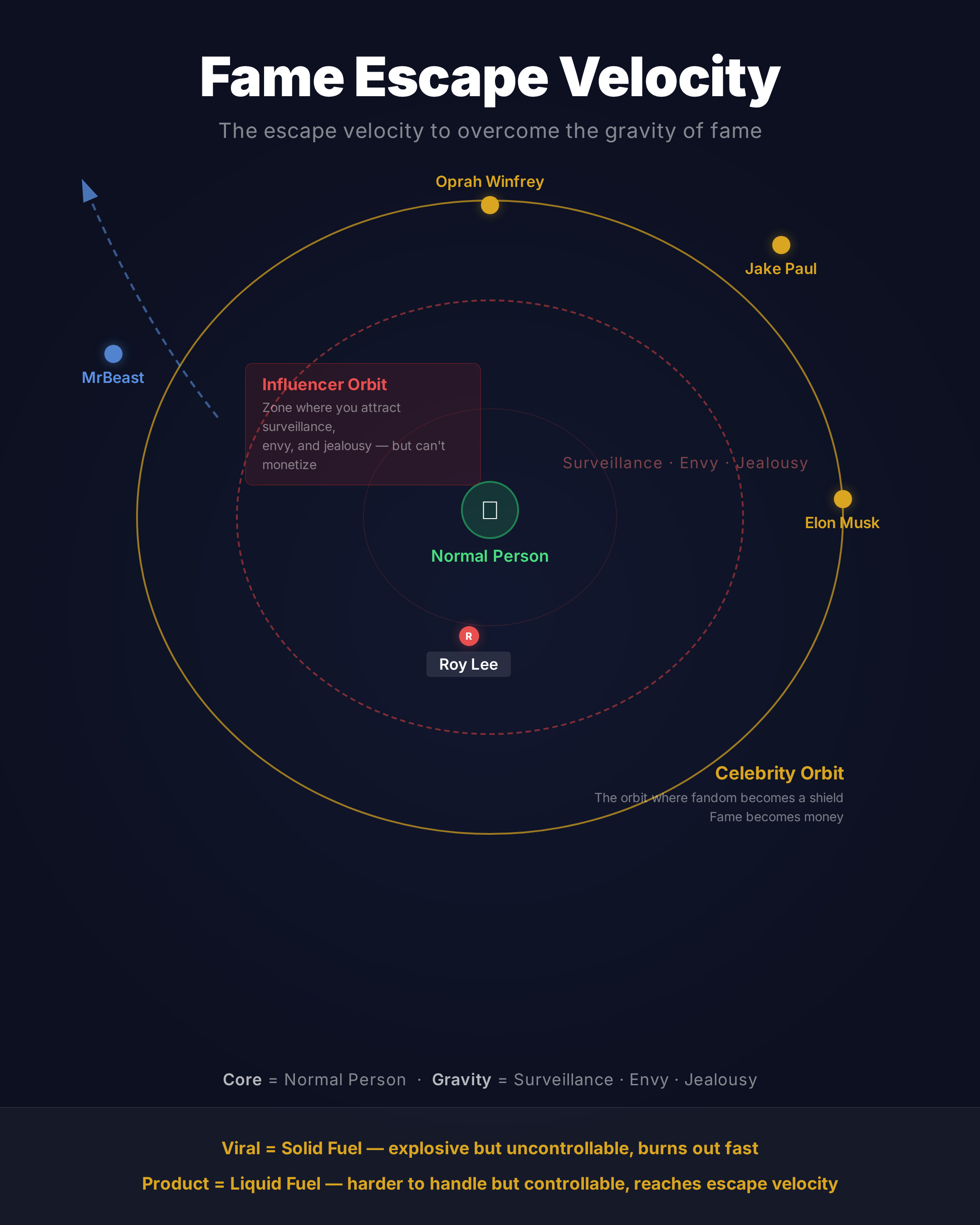
At the center sits what I call the Normal Person core. Comfortably recognized within their company, enjoying work-life balance and everyday life, living a normal existence. Surrounding that core is a gravity field of surveillance, envy, and jealousy. The source of that gravity? People hiding among the normal ones — the ones who, the moment someone pulls ahead, think: “I thought we were on the same level, and now suddenly you’re hot stuff?”
Launch a rocket — get even a tiny bit famous — and the first thing you enter is the Influencer Orbit. This is the danger zone. You’re awkwardly famous enough to be watched, but not enough to monetize. When someone you thought was your equal suddenly blows up, people apply absurdly strict standards. If they can’t tear down that person’s success, they feel like they’re falling behind or failing. So a small mistake gets repackaged as “fraud,” and a $1.8M exaggeration gets placed on the same shelf as Theranos.
The outermost layer is the Celebrity Orbit. MrBeast, Elon Musk — I’d put them here. The scrutiny still exists, but overwhelming fandom acts as a shield, and the revenue alone offsets the gravitational pull. Reach this orbit and fame itself becomes an asset.
The other key element of this concept is fuel. Virality is solid fuel — ignite it and it’s explosive, but it burns out fast and once you light it, you can’t turn it off. When it’s spent, you need a new booster. The moment you depend on virality, you must constantly manufacture the next viral moment, and when the fuel runs out, gravity drags you down. Cluely and Roy have been riding exactly this trajectory.
Product and retention are liquid fuel. Far harder to handle. Collecting user feedback daily, fixing bugs, improving quietly — no big bang, and it’s a pain to manage. But liquid fuel is controllable. You can throttle it, meter it precisely as needed.
Roy launched the Cluely rocket on solid fuel called virality. It climbed fast, but the uncontrollable fuel kept burning away, demanding endless controversy and marketing. Instead of switching to the liquid fuel engine — spending time building the product — he kept chasing the next solid booster. Building a product is far harder than generating buzz. But the harder path is ultimately the right one. A rocket out of fuel cannot beat gravity.
It ain’t over until it’s over
The Roy Lee I see is a young, smart, ambitious founder. I felt it when I first met him, and the sheer execution behind $5.2M in real revenue proves it.
Personally, I view this incident as a mistake born from engaging with media while still lacking experience. He lied — that’s a fact. But if it’s not a legal issue — if it was competitive bravado aimed at the press, not investors — then this is a chapter of learning and reflection, not the end. Honestly, the fact that he voluntarily confessed something he didn’t have to say shows a degree of integrity.
If it’s not financial fraud, his career doesn’t need to end here. Stewart Butterfield ran two game companies into the ground and then built Slack. Silicon Valley isn’t a place that buries people forever for honest failure — it’s a place that watches what you learned from it. He’s proven he’s great at finding solid boosters and burning them hard. Now it’s time to fire up the liquid fuel engine. Whether it’s with Cluely or the next company.
I’ll probably catch heat for this, but I’ll be completely honest: even if I could turn back time, I think I still would have wanted to invest. VC is, by nature, a bet on people with dreams different from everyone else’s. In a world of venture capital where 95% fail, I believe it’s the obsessive, execution-driven, polarizing outliers who win. Of course, if it turns out Roy deceived his investors too, then I was wrong about the person. But if that’s not the case, my desire to bet on what this person builds next hasn't changed.
Thank you for reading, as always.
Ian